


How Recruitment Agencies in India Can Win Mandates from US Companies Setting Up India Centres
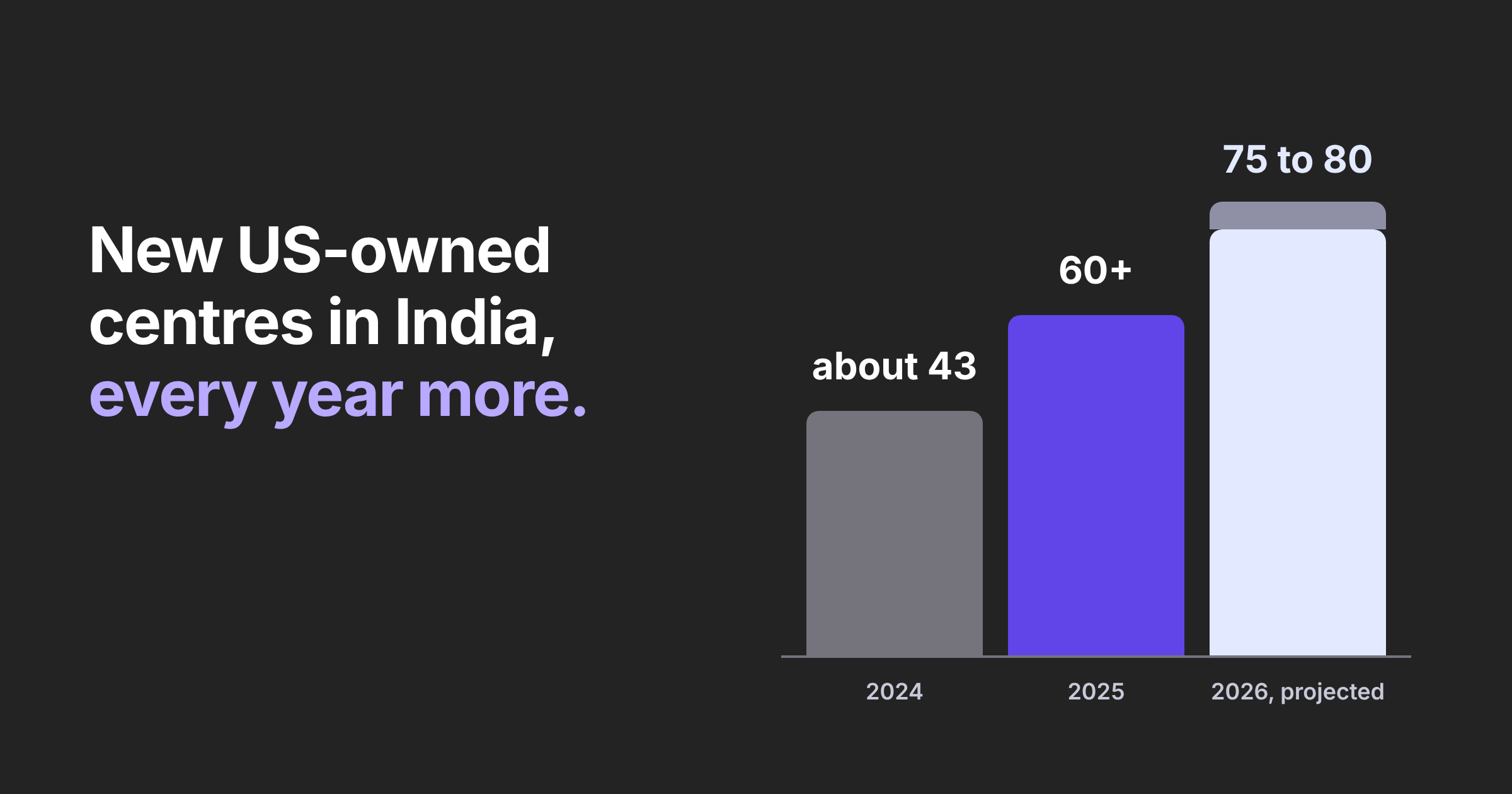
US companies keep opening new teams in India. ANSR Research data, reported by Moneycontrol, shows US-headquartered companies set up over 60 new global capability centres (GCCs) in India in 2025, up from roughly 43 in 2024. ANSR projects 75 to 80 more in 2026.
A Business Standard report from 7 November adds more. Industry experts expect existing India centres to expand first, with new set-ups continuing through 2027. They also expect mid-sized US and European companies in healthcare, insurance, retail, manufacturing and energy to consider centres of their own.
Every one of these centres has to hire a team. For a recruitment agency, that is a real chance. But these mandates are not won the same way as a normal local requirement. This guide explains what these clients want and how to be ready.
Who actually gives you the mandate
Many US companies setting up in India have no recruiting team on the ground yet. The person briefing you may be:
- A US engineering leader who has never hired in India
- A small, newly formed India leadership team
- A set-up partner or employer of record who handles legal and payroll
- A new head of talent acquisition who is building the process from zero
Each of them cares about the same thing: getting the first 10 to 20 good people quickly, without making expensive mistakes. They are not buying resumes. They are buying confidence.
What these clients look for in an agency
1. Clear screening, not just forwarded resumes. A US hiring manager cannot judge Indian resumes easily. They need a summary: what the person built, what they owned, notice period, current and expected CTC, and why they are leaving.
2. Honest notice period information. Experienced engineers in India often serve notice periods of 60 to 90 days. Clients planning a 90 day ramp need to know this on day one. Agencies that hide it lose trust fast.
3. Speed with accuracy. Fast is good. Fast and wrong is worse than slow. A short list of five strong profiles beats twenty weak ones.
4. Time zone comfort. Be ready for calls at the start or end of an Indian working day. Reply to questions inside the same working day.
5. Process they can follow. These clients want to know where every role stands. A weekly update, even a short one, builds more trust than a long email once a month.
How to prepare before you pitch
- Pick a clear niche. "Backend and cloud engineers in Pune and Hyderabad" is easier to trust than "all IT roles".
- Build a small bench of pre-screened people. Candidates you have already spoken to, with notes, let you respond within days.
- Prepare a one page agency profile. Include your niche, cities, typical roles filled, and how you screen. Keep it plain.
- Write a sample screening summary. Show a client exactly what they will receive with each profile.
- Know the market basics. Be ready to talk about CTC ranges, notice periods and city competition without guessing.
Where agencies lose these mandates
- Sending volume instead of quality. US managers get tired of reviewing weak resumes.
- Slow replies. A strong engineer with several offers will not wait.
- Overpromising on joining dates. If a 90 day notice cannot fit the plan, say so early.
- No clear screening notes. The client cannot tell your profiles apart from anyone else's.
- Pitching to everyone. Chasing every GCC dilutes your message. Focus on the ones that match your niche.
How to find these mandates
- Watch the news. Announcements of new India centres are public. Note the company, the sector and the city.
- Look for the right contact. Search for the India head, the engineering lead or the talent acquisition lead. Send a short, specific message about a skill you can deliver.
- Ask your network. Candidates you place at one centre often know about the next.
- Be visible where the work is posted. More companies now post requirements on marketplaces so they can reach several agencies at once.
Where a marketplace fits
A recruitment agency marketplace puts real, active requirements in front of agencies that match the skill and city. You do not have to cold call a company that may not be hiring. You submit candidates through the platform, and each submission is recorded against your agency, so credit is clear even when several agencies work the same role. It adds a channel on top of your own client relationships. It does not replace them.
The bottom line
The number of US-owned India centres is growing, and each one needs agencies it can trust. The agencies that win will be specific about their niche, honest about notice periods, and clear in how they screen. Build that first, then go after the mandates.
See which hiring requirements are active on Highring. Join as an agency.
Sources: ANSR Research via Moneycontrol; Business Standard, 7 November 2026. Highring is a recruitment agency marketplace for companies and agencies. We are not a job board and do not accept direct resumes from candidates.