


How to Screen Candidates Properly (And Why Most Recruiters Skip It)
There's a pattern that shows up across recruitment agencies of every size: a recruiter gets a job requirement, searches a database or job board, finds resumes that roughly match the keywords, and submits them. No call. No verification. No real screening. Just volume, hoping something sticks.
This isn't a small-agency problem or a junior-recruiter problem. It's a structural one. When compensation is tied purely to submission volume rather than placement quality, the incentive quietly shifts from "find the right person" to "submit enough people that one of them works out." The company on the receiving end feels this immediately: too many irrelevant resumes, too much time spent filtering candidates who were never actually qualified, and a growing reluctance to work with agencies at all.
What real screening actually looks like
Proper candidate screening isn't a single step it's a short sequence, and skipping any part of it is where quality breaks down.
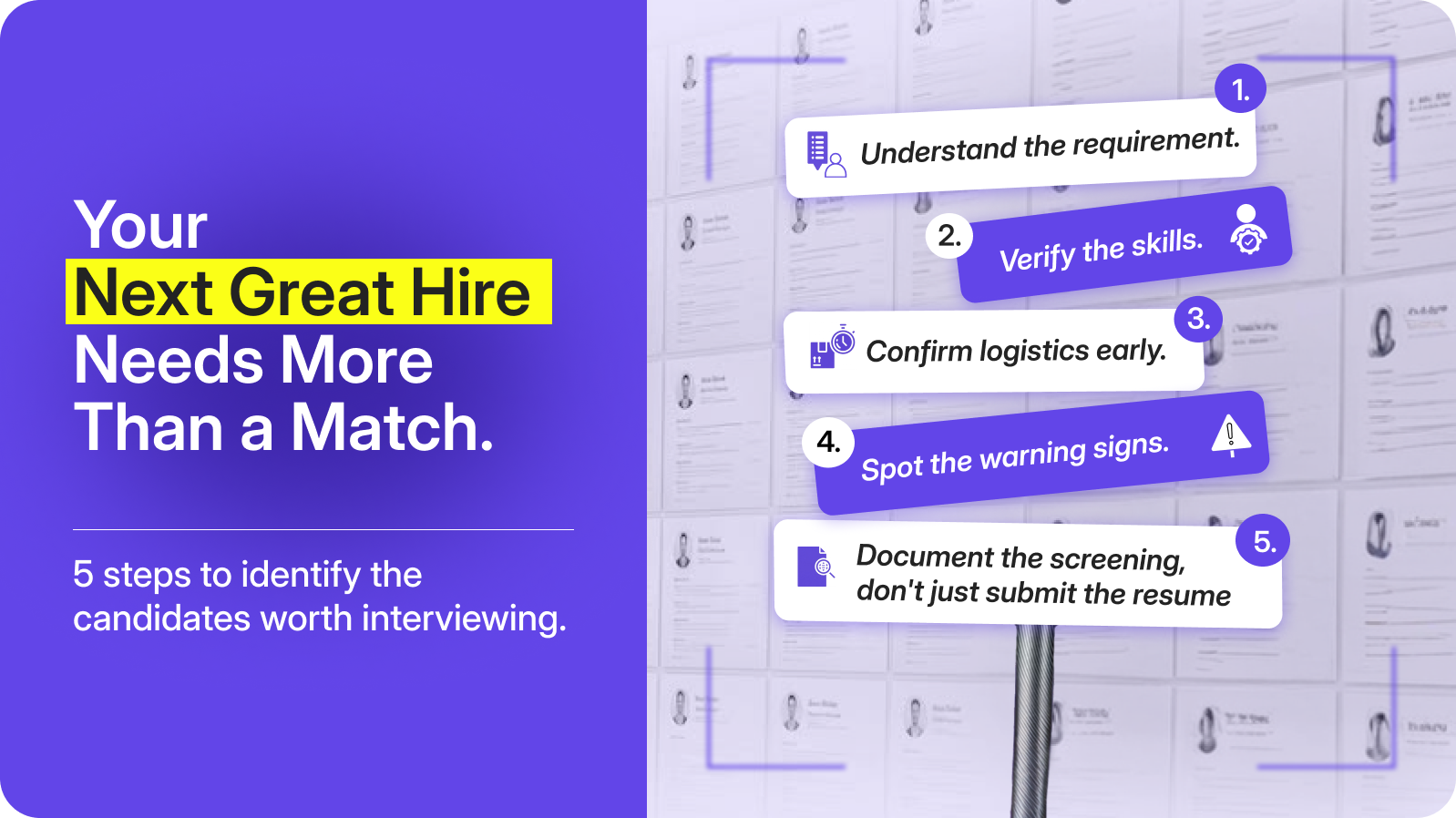
1. Understand the actual requirement, not just the keywords
A job title and a skills list on a JD rarely tell the whole story. Before sourcing a single candidate, a good recruiter understands: why is this role open (backfill, new team, growth), what does success actually look like in the first 90 days, and what's genuinely non-negotiable versus nice-to-have. Matching keywords in a resume to keywords in a JD isn't screening it's pattern-matching, and it's exactly why unqualified candidates get submitted.
2. Verify skills, don't just confirm them
"Do you have 5 years of experience with X?" is a question a candidate can answer yes to regardless of whether it's true. Real verification asks candidates to explain how they solved a specific, relevant problem not whether they've heard of the technology, but what they actually did with it. This single change catches the majority of resume inflation before it reaches a client.
3. Confirm logistics before submission, not after
Salary expectations, notice period, and location or remote flexibility should be confirmed in the same conversation as the skills screening not discovered three interview rounds later when a client has already invested real time. A candidate whose expected salary is 40% above the role's budget, or whose notice period doesn't fit the client's timeline, should never reach a submission stage.
4. Watch for the patterns that actually predict problems
Frequent short tenures without a clear explanation, vague or inconsistent answers about why they're leaving a role, and resume claims that don't hold up under a follow-up question are the real signals worth flagging not gut feeling, but specific, repeatable checks a recruiter can run on every candidate in the same way.
5. Document the screening, don't just submit the resume
A submission with a short screening summary what was verified, what the candidate said about their notice period and salary expectations, any flags worth knowing gives the hiring company confidence that a real conversation happened. A bare resume with no context reads exactly like what it usually is: unscreened.
Why this matters more than it seems
Every candidate submitted without real screening costs someone else time: the hiring manager who reviews a resume that was never going to be a fit, the recruiter who has to explain why the process is taking too long, and eventually the agency itself, once a client stops trusting submissions and starts double-checking everything before even scheduling a call. Screening properly isn't slower in any way that matters it's the difference between a submission that gets acted on and one that gets filed away and forgotten.
The bottom line
The gap between a submission and a hire is rarely about whether the right candidate exists in the market. It's about whether anyone actually verified fit before hitting submit. Recruiters who build a consistent, repeatable screening process, not a longer one, just a real one, are the ones whose candidates actually get interviewed.