


Recruitment Agencies: The Marketplace Model Isn't Competition. It's Distribution.
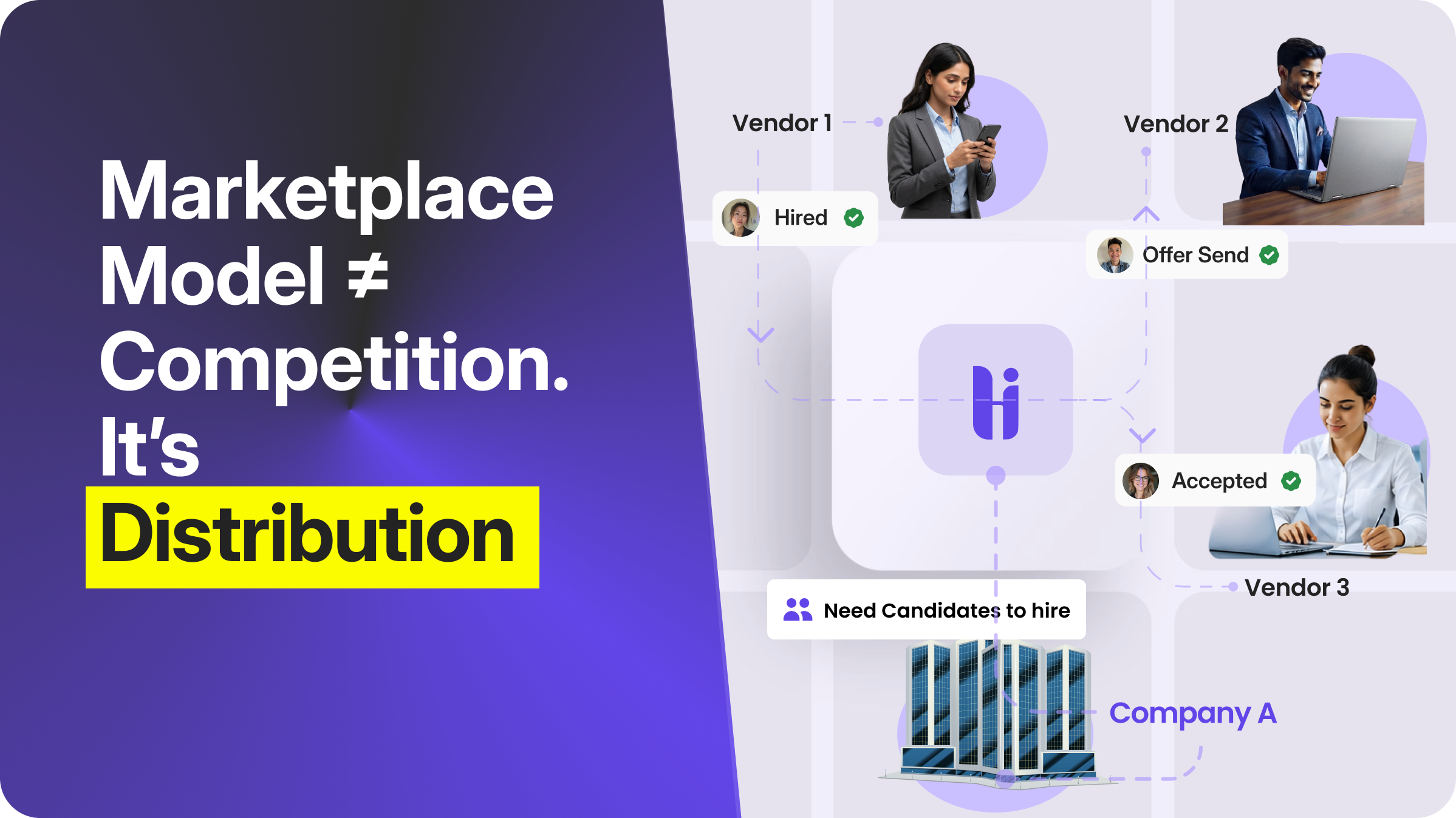
If you run a recruitment agency in India, you've probably felt some version of this: platforms and marketplaces are changing how companies find recruitment partners, and it's not always clear whether that's good news for your business or a threat to it.
Here's the honest answer: it depends entirely on how you use it. Treated right, a recruitment marketplace isn't competition it's a new distribution channel for exactly the thing every agency struggles with most: consistent access to real, qualified client demand.
The real problem most agencies are fighting
Cold outreach is expensive and unreliable. Client relationships take months to build and can end with a single lost account. And even strong agencies often only see a fraction of the open roles in the market at any given time, because discovery still runs on relationships and referrals rather than visibility.
That's not a talent problem. It's a distribution problem. Most agencies aren't short on the ability to find good candidates they're short on consistent access to companies who actually need them, at the moment those companies are hiring.
What actually changes with a marketplace model
A recruitment vendor marketplace flips the discovery problem around. Instead of an agency having to find and win each client relationship individually, companies post real, active hiring requirements and agencies get matched to the ones relevant to their specialization. No cold calling. No pitching a company that may not even be hiring right now.
This works especially well for agencies with a specific strength deep expertise in a technical domain, a particular industry vertical, or a specific city or region. Instead of that specialization only reaching the handful of clients you've personally built relationships with, it becomes visible to every company posting a matching requirement on the platform.
Addressing the actual fear directly
The concern most agencies have isn't unreasonable: does this mean competing with 100+ other agencies for every single role? Sometimes, yes for high-demand skill categories, multiple agencies may work the same requirement in parallel. But that's also true of the market already; companies rarely work with only one agency for long, especially for competitive roles. The difference is that on a marketplace, you're seeing roles you'd otherwise never have had visibility into at all the net effect is more real opportunities, not fewer.
And because every candidate submission is tracked back to the agency that made it, there's no ambiguity about who gets credit for a placement, even when multiple agencies are working the same role. You're not losing anything you'd have kept in a direct relationship you're gaining access you didn't have before.
What this looks like in practice
Join a recruitment marketplace, and your specialization becomes visible to companies actively hiring for exactly that instead of only the clients you already know. You get matched to real, verified hiring requirements. You submit candidates directly through the platform, get paid on successful placement, and build a track record that makes you more likely to get matched to future roles in your strength area.
No exclusivity required this doesn't replace your existing client relationships, it adds a channel on top of them.
The bottom line
The agencies who treat a marketplace as a threat to defend against will likely see it that way. The ones who treat it as a new source of client demand on top of what they already have, not instead of it tend to get exactly that: more visibility, more relevant roles, and less time spent on cold outreach that doesn't convert.
See what hiring requirements are active on Highring right now. Join as a vendor.
Highring is a recruitment agency marketplace for companies and agencies. We are not a job board and do not accept direct resumes from candidates.